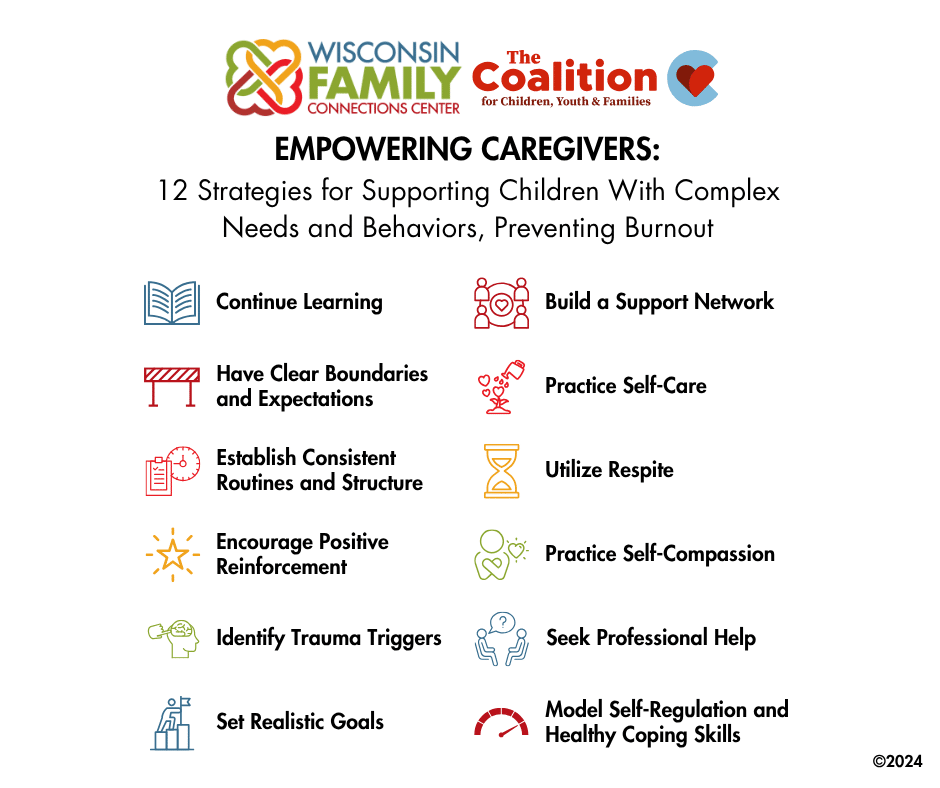
Empowering Caregivers: 12 Strategies for Supporting Children with Complex Needs and Behaviors, Preventing Burnout
Supporting and caring for children with complex needs and behaviors can be emotionally, mentally, and physically demanding. Caregivers must prioritize their well-being to avoid burnout. This visually engaging resource offers practical strategies to empower caregivers facing the challenges of supporting these children. By considering the suggested methods, we hope caregivers can enhance their resilience and maintain their wellbeing while providing essential care and support.
Continue Learning.
Stay informed of the latest information, techniques, and interventions to support children with complex needs and behaviors.
Have Clear Boundaries and Expectations.
Setting clear boundaries and expectations regarding behaviors can create structure, increase understanding, and encourage
accountability.
Establish Consistent Routines and Structure.
Predictability in routines and structure can minimize stress and encourage a sense of security and stability.
Encourage Positive Reinforcement.
Acknowledging positive behaviors when you see them can promote a supportive and nurturing environment, boost self-esteem,
and reinforce desired behaviors.
Identify Trauma Triggers.
Recognizing signs and situations that tend to escalate behaviors and emotions can help you proactively manage challenging
situations, provide the right support, and create a safer and more predictable environment for kids with complex needs and
behaviors.
Set Realistic Goals.
perfection.
Be mindful that progress may be slow and setbacks may happen. Celebrate small wins and keep focused on progress, not
Build a Support Network.
Connect with other caregivers, parenting networks, and support groups for emotional support.
Practice Self Care.
Build in time for regular self-care to manage stress, increase energy, and add to your resilience as a caregiver.
Utilize Respite.
It’s okay to take a break when needed to recharge.
Practice Self-Compassion.
Be kind to yourself, especially during trying moments. Acknowledge your efforts and understand your limitations so you do not
feel guilty when you need to ask for help. Asking for help is not a sign of weakness.
Seek Professional Help.
Be proactive. Consult professionals for guidance as often and early as needed. Early intervention can be a precious tool for
you.
Model Self-Regulation and Healthy Coping Skills.
Consistently modeling self-regulation and healthy coping skills by caregivers can help children learn to identify, express, and
regulate their emotions effectively while also teaching them positive coping strategies.
Author: Wisconsin Family Connections CenterAdditional Author: Coalition for Children, Youth & Families